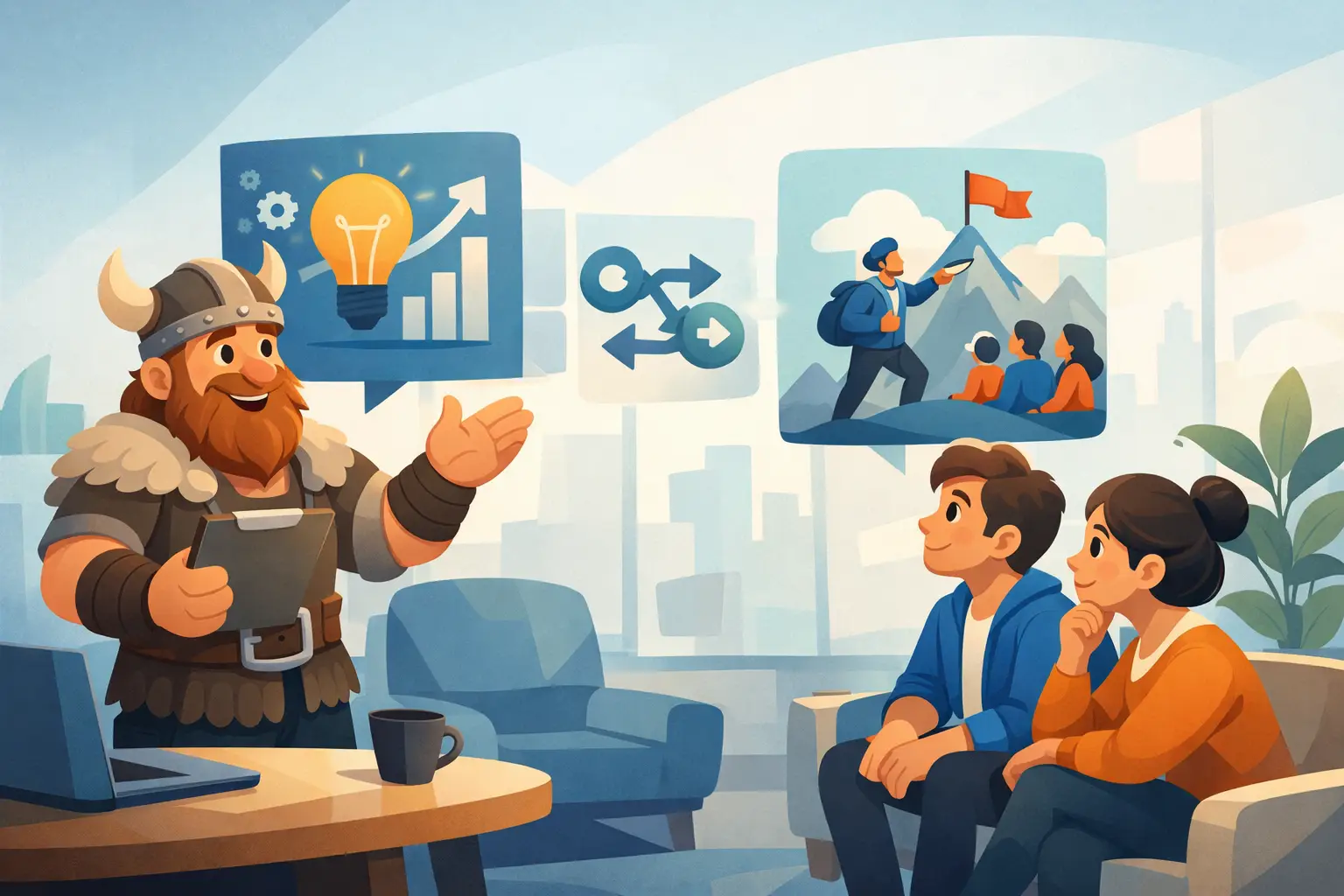
A coaching business can look busy long before it looks scalable. You are delivering sessions, chasing follow-ups, refining offers, writing content, handling admin, and trying to think strategically in the gaps. That is exactly why more founders are asking how to use AI in coaching business growth – not as a gimmick, but as a practical way to make better decisions and keep momentum.
Used well, AI does not replace your judgement, your client relationships, or the trust that makes coaching valuable. What it can do is remove drag. It can help you think faster, spot patterns earlier, and turn ideas into action without needing a bigger team. For a lean coaching business, that matters.
How to use AI in coaching business operations
The most useful way to think about AI is not as one big solution. It is a layer of support across the work that slows you down. In most coaching businesses, that means marketing, sales, client delivery, planning, and admin.
If you start with the right problems, AI becomes commercially useful very quickly. If you start by asking it to do everything, you usually end up with generic output and more clutter.
A good first step is to look at where your time goes each week. If you are repeatedly writing proposals, summarising calls, drafting follow-up emails, planning content, or structuring client action plans, those are strong candidates for AI support. They are valuable tasks, but they do not all need to start from a blank page.
AI is especially powerful when the work needs structure. A coach still needs to shape the thinking, challenge assumptions, and personalise advice. But AI can provide the first draft, the framework, the checklist, or the analysis that gets you moving faster.
Start with the parts of the business that drain time
Most coaching founders do not need more ideas. They need more capacity. That is why the smartest AI use cases tend to sit in the operational middle – the work between strategy and delivery.
In marketing, AI can help turn one core idea into several pieces of content for different channels. It can suggest better positioning for your offer, surface likely client objections, and help you test clearer messaging. That does not mean publishing whatever it gives you. It means using it to get to a stronger draft faster.
In sales, AI can help qualify leads, tailor proposals, prepare discovery questions, and generate follow-up sequences that do not sound stiff or generic. For a coaching business, this is useful because sales is often where momentum drops. Leads go cold not because the offer is wrong, but because follow-up is inconsistent.
In delivery, AI can support session prep, note-taking, recap creation, and action plan design. If you coach founders or teams, it can also help you spot patterns across conversations – recurring issues in pricing, hiring, accountability, or growth. That gives you a stronger base for your advice.
Admin is the least glamorous use case, but often the most profitable. If AI cuts hours from scheduling prep, reporting, research, and routine communication, it gives you more room to sell, coach, and improve your service.
Where AI adds value without weakening your coaching
There is a clear line between useful support and lazy automation. Clients do not pay for polished wording alone. They pay for context, challenge, judgement, and progress.
That means AI works best when it strengthens your thinking rather than standing in for it. For example, it can help you build a sharper client diagnostic before a session, but you still need to interpret what matters. It can draft a 90-day plan, but you still need to test whether that plan fits the client’s stage, resources, and appetite for change.
This is where many coaches get it wrong. They use AI to produce more output, when they should be using it to improve decisions. More content, more documents, and more templates do not automatically create value. Better clarity does.
A strong rule is this: use AI for speed, structure, and synthesis. Keep human control over strategy, nuance, and accountability.
How to use AI in coaching business marketing and sales
Marketing and sales are usually the easiest places to see quick wins. They are also where poor AI use becomes obvious fast.
If your content starts sounding vague, overblown, or identical to everyone else in your market, it is not helping your brand. A coaching business grows on trust and differentiation. Your voice needs to stay recognisable.
The better approach is to use AI behind the scenes. Feed it your offer, ideal client profile, common client pain points, and examples of past conversations. Then ask it to help with specific tasks: refine a landing page message, generate five angles for a LinkedIn post, turn a webinar into an email sequence, or outline a lead magnet that solves one focused problem.
In sales, AI can be even more practical. It can help you map a lead journey, create qualification criteria, write better proposal wording, and prepare tailored next steps after a sales call. If you are selling to different sectors, it can also help you adjust your messaging without rebuilding your process from scratch each time.
This is one reason platforms such as Any Guru are appealing to growing businesses. Instead of relying on generic prompting, founders can tap into coaching-style AI support built around business decisions, execution, and function-specific guidance. That tends to produce more commercially useful output than a blank chat box.
Build simple systems before you chase automation
One of the biggest trade-offs with AI is that it can accelerate messy processes just as easily as good ones. If your offer is unclear, your sales process is inconsistent, or your client journey changes every week, AI may help you produce more material, but it will not fix the underlying issue.
Before you automate anything, define the process first. What happens from lead enquiry to proposal? What happens from signed client to first session? What happens after each session? What should every client receive, and where does personalisation begin?
Once those steps are clear, AI becomes far more useful. It can help standardise your onboarding, maintain quality in communication, and reduce the mental load of running repeatable systems. That is where scale starts to feel realistic.
For most coaching businesses, simple beats clever. A well-defined process supported by AI is usually more effective than a highly automated setup no one trusts or uses consistently.
Protect quality, confidentiality, and judgement
There is another side to this. Coaching often involves sensitive information – commercial plans, team issues, personal performance concerns, and client data. So if you are using AI in your coaching business, governance matters.
Be clear on what information you share, where it is stored, and which tools are appropriate for confidential work. You should also sense-check anything client-facing before it goes out. AI can sound convincing while missing context, overstating certainty, or flattening nuance.
That matters even more in coaching because clients often bring incomplete information to the table. Your role is not just to process facts. It is to ask better questions, challenge stories, and guide action. AI can support that work, but it should not become a substitute for professional care and sound judgement.
There is also a brand risk. If your clients feel they are receiving machine-written advice with a light human edit, trust drops quickly. The standard should be simple: AI can support the experience, but the client should still feel your expertise in the room.
The best way to begin
If you are wondering how to use AI in coaching business growth without overcomplicating it, start with one commercial bottleneck. Pick the area where better speed or consistency would make the biggest difference over the next 90 days.
For some coaches, that will be lead generation. For others, it will be proposal turnaround, onboarding, or session follow-up. Choose one workflow, improve it, and measure the result. Are you responding faster? Closing more consistently? Delivering a better client experience? Saving meaningful time each week?
That approach keeps AI grounded in outcomes rather than curiosity. It also helps you avoid the common trap of adopting too many tools before you have a clear use case.
The coaching businesses that benefit most from AI are not the ones trying to automate their value. They are the ones using it to think more clearly, move faster, and deliver support with greater consistency. That is a very different proposition.
When used with discipline, AI gives you leverage. Not the noisy kind. The practical kind that helps you build a coaching business that is easier to run, easier to grow, and stronger under pressure. Start there, and scale with confidence.